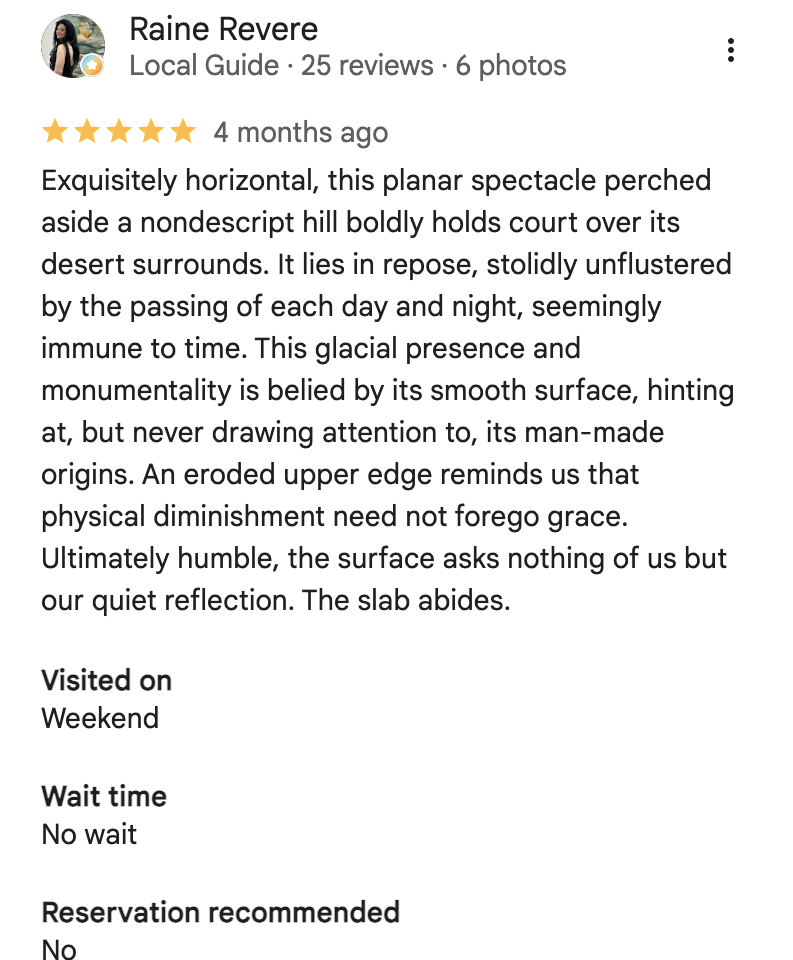
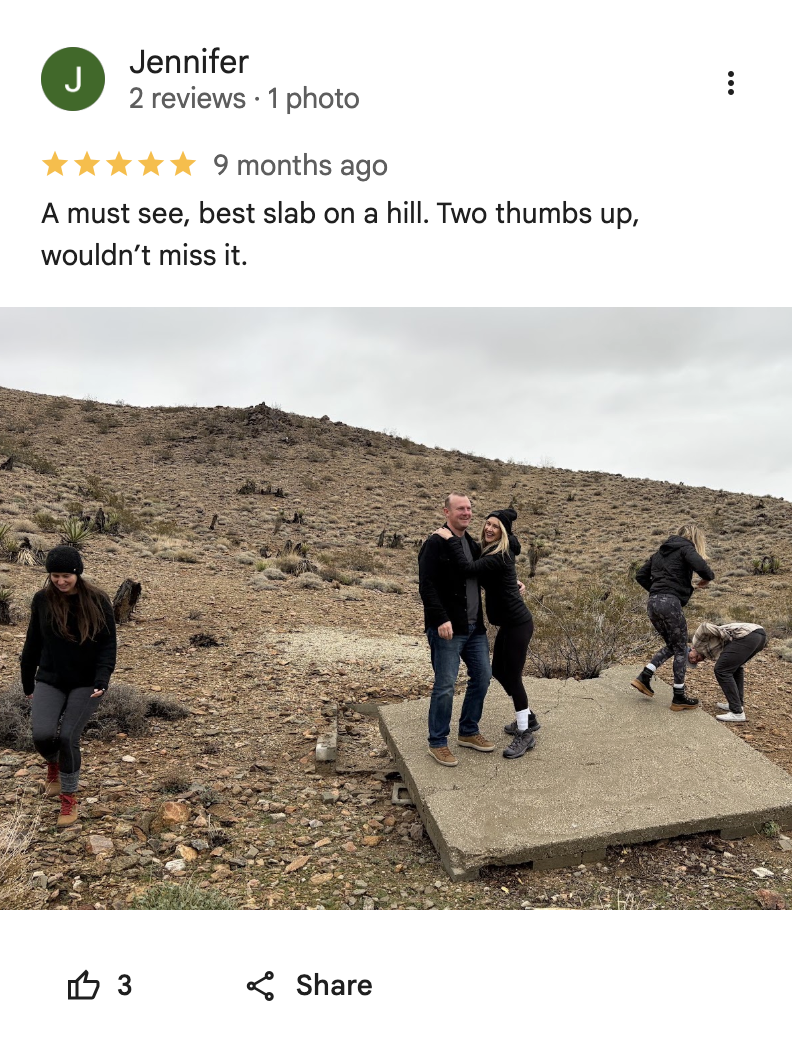
This ongoing project began with my fascination with the Californian desert. I first travelled there to film a short movie, “UFO: Kitty Attack", and became particularly interested in the landscapes around Landers and the High Desert, ca. What initially began as an interest in a specific landscape gradually developed into a broader investigation after a dear friend, Mina, recommended “Learning from Las Vegas” by Denise Scott Brown, Robert Venturi, and Steven Izenour. The book offered me a new way of looking at the desert and its infrastructure. Its attentive and non-judgmental examination of Las Vegas and its landscape fascinated me, particularly the idea of a city that seems to have emerged almost from scratch, where architecture, signage, infrastructure, and entertainment become deeply intertwined. Las Vegas began to appear to me almost like a mirage: a constructed environment in which entertainment is not simply an addition to the city, but one of its fundamental organizing principles. This made me interested in the possibility of studying such phenomena not as exceptions or curiosities, but as important expressions of contemporary society.
For three consecutive years, I returned to the same areas of California and Nevada, repeatedly travelling between Los Angeles and Las Vegas. I became increasingly aware of how vast and seemingly empty certain sections of this route are, particularly around Death Valley. Outside of a small number of established landmarks, there are long stretches with almost nothing to see, visit, or stop for. This observation led to the first intervention of the project: I began placing tiny, invented or discovered points of interest on Google Maps.
Some of the first locations were based on objects I encountered in the landscape - a “White Rock,” a “Cement Slab on a Hill,” or other seemingly insignificant formations. To my surprise, people travelling along the same routes began interacting with these locations as if they were genuine tourist attractions. They left reviews, photos, assigned ratings. The following year, I returned and created more such locations. One of them, for example, was called “Sandy's Historic Hole”: simply a hole in the sand that may no longer even exist. Its low rating becomes part of the investigation, as the visitor is effectively reviewing an attraction whose existence is uncertain.
These interventions function somewhere between a Google Maps meme, a fictional tourist infrastructure, and a small-scale performance distributed through a digital platform. At the same time, the project also engages with pre-existing landmarks, which I document through video. Although Google Maps is the interface through which many of these places are encountered in the work, my relationship to the landscape is not exclusively virtual. I have physically travelled there, stood in these locations, filmed them, and experienced them directly. The tension between these two modes of experiencing place: being physically present and encountering a place through technology — is central to the project.
In this sense, Google Maps becomes not only a mapping tool but also a device for memory. Growing up in a country where travelling, and especially travelling to the United States, was not easily accessible to me, I spent countless hours exploring Google Maps virtually. I would “walk” through American landscapes and visit random places from my childhood imagination without ever expecting to see them in reality. “Returning” to some of these places as an adult created a strange collision between memory and physical experience: places that had existed for me as digital images could suddenly be occupied by my own body and seen with my own eyes. This overlap between technology and physical reality is also what gives the project its sentimental dimension. The digital map allows me to replay and manipulate memories, while physical travel allows me to temporarily insert myself into the landscapes I previously knew only through a screen.
The project also draws heavily from my fascination with memes and American pop culture, particularly the strange and often comical phenomenon of roadside attractions and self-proclaimed landmarks: the World's Largest Scissors, the Clown Motel, and countless other places that turn exaggeration and randomness into destinations.
I am interested in these landmarks not as objects of ridicule, but because of their disarming directness. There is something uniquely sincere in the way a young country can transform almost anything into an attraction, a story, or a reason to stop. Their absurdity becomes a form of entertainment, but also a reflection of how contemporary American culture produces meaning around place.
My interventions therefore operate somewhere between physical landscape and digital landscape, between tourism and fiction, and between personal memory and collective participation. By placing insignificant objects into Google Maps and giving them the status of attractions, I am interested in what happens when a place is named, reviewed, photographed, and digitally circulated. The physical object may be almost meaningless, while its digital representation can acquire a social life of its own.
*An important question within the project concerns the apparent emptiness of the desert. I am currently researching the Indigenous histories of these territories and questioning my initial perception of certain areas as unused or unoccupied. It is important to me to understand the histories of the land before making claims about its emptiness. I want to approach this aspect carefully and acknowledge that landscapes which appear empty from a contemporary tourist perspective may have deep cultural, historical, and spiritual significance. The physical interventions themselves are intentionally minimal and do not aim to significantly alter the landscape or ecosystem. Their primary impact exists within the digital sphere: they create small fictional attractions, or “Google Maps memes,” that operate as psychological and participatory entertainment rather than conventional visual art objects.
Ultimately, the project asks what makes a place worth visiting, remembering, photographing, reviewing, or believing in.
i learned from las vegas (2023 - ongoing)